
24 Hour Golf Club Access: Complete Guide
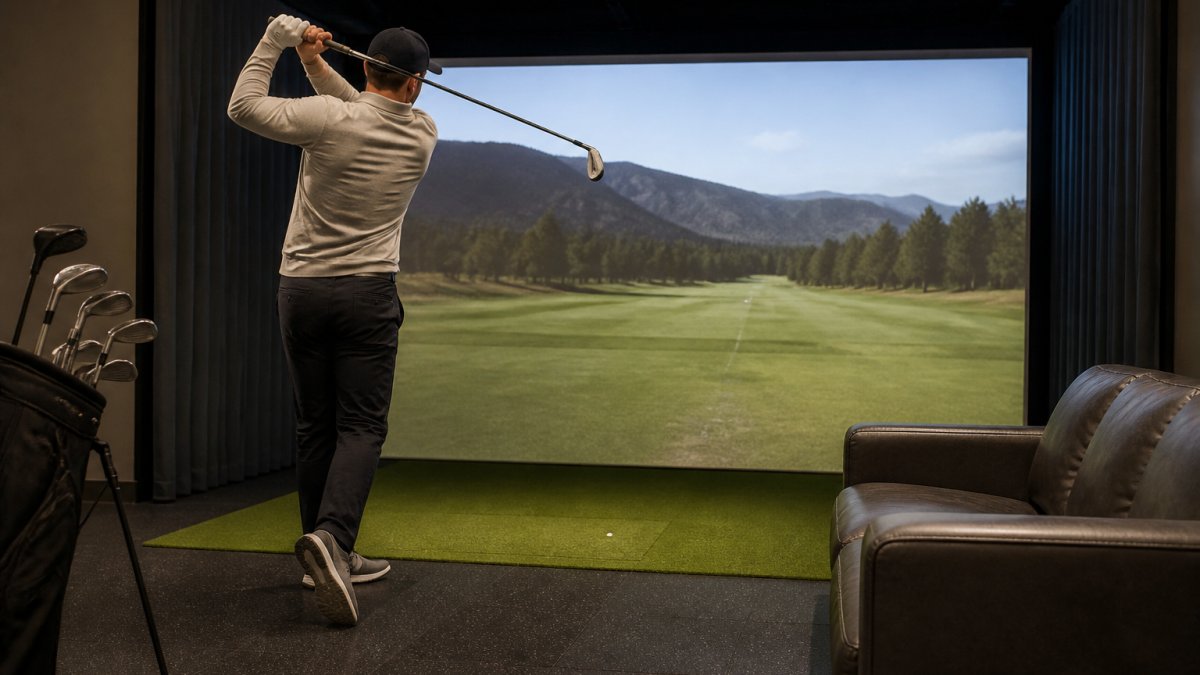
Table of Contents
- What 24 Hour Golf Club Access Actually Means
- Benefits of Indoor Golf Practice for Every Skill Level
- How Year-Round Golf Training Works in a Private Setting
- Understanding Indoor Golf Simulator Membership Cost
- Precision Data and Shot Tracking: What It Changes
- Private Bays vs. Public Simulators: Why Privacy Matters
- Is 24 Hour Golf Club Access Right for You?
- Frequently Asked Questions
Last Updated: October 7, 2026
What 24 Hour Golf Club Access Actually Means
24 hour golf club access is the ability to practice and play golf on your own schedule, without constraints of business hours, tee times, or seasonal closures. It means walking into a private facility at midnight or 6 AM and having a fully equipped golf simulator bay ready for your session. At Open Tee Golf in Wyoming, MI, this translates to climate-controlled, private bays equipped with Full Swing simulators that track every shot with military-grade precision.
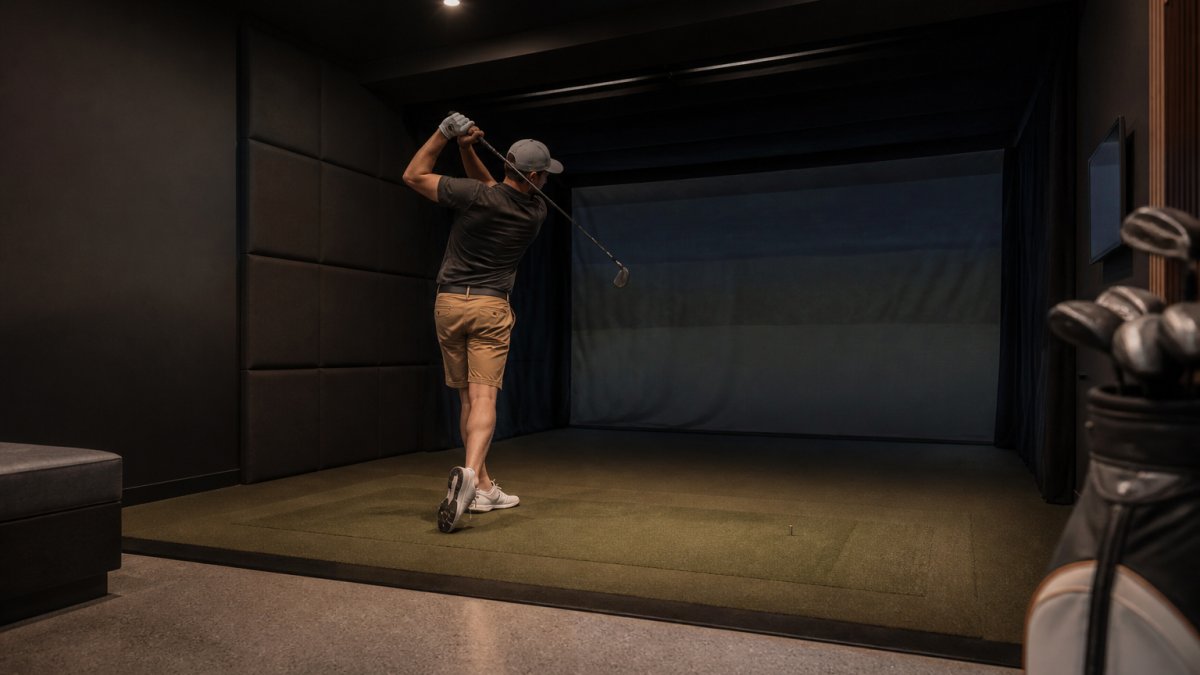
The key difference between 24 hour access and traditional golf is control. You're not waiting for a tee time. You're not competing for range balls. You're not constrained by daylight or weather. A shift worker can practice at 2 AM. A competitive amateur can analyze swing data at 10 PM. A couple can enjoy a round together on their own terms, whenever their schedules align.
This isn't just convenience, it's a fundamental shift in how serious golfers approach improvement. Traditional golf clubs operate on fixed schedules. You book a tee time weeks in advance, hope the weather cooperates, and squeeze your practice into whatever windows the club allows. With 24 hour golf club access, the facility adapts to your life, not the reverse.
Benefits of Indoor Golf Practice for Every Skill Level
Indoor golf practice delivers measurable improvements regardless of where you're starting. Beginners get immediate feedback on swing mechanics without the intimidation of a crowded range. Intermediate players refine consistency through repetition in a controlled environment. Advanced competitors use precision data to identify micro-adjustments that separate good scores from great ones.
The climate-controlled environment removes one of golf's biggest variables: weather. Rain, wind, and temperature swings mask the true quality of your swing. Indoors, every session is identical conditions. You can isolate what actually changed in your mechanics versus what changed because it was 15 degrees colder.
For beginners especially, the private bay removes psychological barriers. New golfers often feel self-conscious on public ranges, worried about judgment or comparison. A private bay eliminates that friction. You practice without an audience, which means you focus on mechanics instead of perception.
Intermediate players benefit from data they'd never get at a traditional range. Full Swing simulators track ball speed, launch angle, spin rate, and shot dispersion. You can see exactly why that shot went left, whether it was club path, face angle, or timing. This specificity cuts years off the learning curve.
Competitive players use the same data to optimize for tournament conditions. You can play specific courses in the simulator, test different club selections, and practice pressure situations. The precision data reveals patterns, maybe your tempo quickens under stress, or you tend to over-swing with certain clubs.
How Year-Round Golf Training Works in a Private Setting
Year-round training in Wyoming, MI means you're not losing six months to winter. Traditional golfers in the Midwest watch their game deteriorate from November through March. They come back in spring rusty, inconsistent, and frustrated. Year-round training prevents that regression entirely.
A private setting amplifies the benefit. You're training in the exact conditions you'll compete in, quiet, focused, consistent. There's no wind noise to distract you. No weather delays. No crowds. The environment stays identical week to week, which means you're measuring pure improvement, not adaptation to random conditions.
The structure of year-round training typically follows this pattern: off-season focus on mechanics and data, pre-season transition to course simulation, and in-season maintenance of consistency. During winter months in Michigan, when outdoor golf is impossible, serious players use the simulator to attack their weaknesses.
As spring approaches, the training shifts. You move from mechanics drills to full-round simulation. You play specific courses you'll compete on. You practice the shots that matter most, approach shots, short game decisions, pressure situations. By the time outdoor season starts, you're not rusty. You're sharp.
In-season training maintains what you've built. Most golfers think in-season means less practice, but the data suggests the opposite. Golfers who practice 3-4 times per week in-season maintain consistency better than those who only play tournaments. The private bay lets you practice without disrupting your tournament schedule, a 30-minute session before or after work, no tee time needed.
Understanding Indoor Golf Simulator Membership Cost
Membership cost depends on frequency of use, membership tier, and facility amenities. Open Tee Golf offers flexible membership options designed for different usage patterns.
For someone planning to practice 2-3 times per week, the math typically favors membership over pay-per-session rates. You're paying for consistent access, not per-visit fees. The value compounds when you factor in the time saved, no commute to a distant public range, no waiting for availability, no driving to a course just to warm up.
The cost conversation changes when you consider what you're replacing. If you're currently playing 20 rounds per year at public courses, plus occasional range sessions, the simulator membership might actually cost less while giving you more practice volume. You're not paying green fees, cart rentals, or range bucket fees. You're paying for unlimited access to a private bay.
Serious competitive players often find the cost justified by what they're avoiding: travel to tournaments, coaching fees for swing analysis, and lost strokes from inconsistent practice.
Precision Data and Shot Tracking: What It Changes
Precision data transforms practice from guessing into engineering. Traditional range practice is feedback-free. You hit a shot, watch it fly, assume you know what happened, and hit the next one. That feedback loop is broken.
Full Swing simulators capture six data points per shot: ball speed, launch angle, spin rate, carry distance, total distance, and shot dispersion. That's the information tour professionals use. You get the same data in your private bay.
Here's what changes when you have that data: You stop blaming external factors. A shot that goes left used to be "the wind" or "the lie." Now you see it was a 3-degree open club face at impact.
A common example: A golfer thinks they need to swing harder. The data shows they're already swinging at 95 MPH with a 25-degree launch angle. The problem isn't power, it's launch angle. That insight changes everything about how they practice.
Competitive players use the data to optimize for specific courses. You can load a tournament course into the simulator, play 18 holes, and see exactly which clubs are costing strokes. Maybe your 7-iron is inconsistent. The data shows a 6-degree dispersion pattern.
The precision data also reveals when you're improving. You can't fake it. If your carry distance with a 6-iron increased 8 yards over three months, that's real. If your dispersion tightened from 12 yards to 8 yards, that's measurable progress.
Private Bays vs. Public Simulators: Why Privacy Matters
A private bay changes the entire experience compared to a public simulator bar. The difference isn't just comfort, it's performance. When you're alone, you practice differently.
Public simulators are social environments. There's background noise, other people's conversations, and the awareness that others are watching. That environment is fine for casual fun, but it's terrible for serious practice. Your brain is dividing attention between your swing and your surroundings.
A private bay removes that cognitive load entirely. You're alone with your swing and your data. You can take five practice swings before your actual shot. You can stand in silence for 30 seconds before hitting, replicating tournament conditions.
The privacy also matters for specific types of practice. If you're working on a mechanical change, you might need 50 repetitions to ingrain the new movement. In a public setting, that feels excessive and draws attention. In a private bay, you're free to do whatever the practice demands without self-consciousness.
For groups and entertainment, privacy creates a completely different experience. A corporate team using a public simulator bar feels rushed and distracted. A private bay lets the group relax, enjoy the experience, and actually focus on the game.
The private bay also protects your data. Your swing metrics, your weaknesses, your improvement trajectory, that's private information. In a public setting, that data is visible to whoever walks by. In a private bay, it's yours alone.
Is 24 Hour Golf Club Access Right for You?
24 hour golf club access makes sense if you're serious about improvement, need flexibility, or value privacy. It doesn't make sense if you play casually a few times per year and enjoy the social atmosphere of public courses.
Consider your practice frequency. If you're playing 20+ rounds per year and practicing 2-3 times per week, membership likely makes financial sense. If you're playing 5 rounds per year, it probably doesn't.
Consider your improvement goals. Casual golfers who play for fun don't need precision data. They don't need 24 hour access. They need a good time with friends. Competitive players and serious improvers need both. The data is only valuable if you're committed to using it.
Consider your schedule. If you work 9-5 with weekends free, public courses might serve you fine. If you work irregular hours, travel frequently, or need practice time at odd hours, 24 hour access becomes essential.
Open Tee Golf in Wyoming, MI is built for golfers who fall into these categories: serious improvers, competitive players, shift workers, and groups looking for private entertainment. If that describes you, 24 hour golf club access isn't a luxury, it's a tool that removes friction from your improvement process.
24 hour golf club access solves a specific problem: how to practice seriously when traditional golf schedules don't fit your life. If you're committed to getting better, practice consistently, or need flexibility outside traditional hours, membership delivers measurable value. The PGA Tour's investment in simulator technology confirms that professional golfers rely on this exact training method.
| Membership Consideration | Best For | Consider If |
|---|---|---|
| Frequent practice (3+ times/week) | Serious improvers, competitive players | You're committed to data-driven improvement |
| Shift work or irregular hours | 24/7 access essential | You need flexibility outside 9-5 |
| Private entertainment | Corporate groups, couples | You value privacy over social atmosphere |
| Casual play (5-10 rounds/year) | Pay-per-session | You play mainly for fun, not improvement |
Frequently Asked Questions
How does 24/7 indoor golf club access work in Wyoming, MI?
24 hour golf club access means members can enter the facility any time of day or night without restrictions. You use your membership credentials to unlock the doors and access your private bay. Full Swing simulator technology powers each bay, allowing you to play full rounds or practice specific shots. The facility remains climate-controlled year-round, so weather never interrupts your session.
Are indoor golf simulators accurate enough for serious practice?
Full Swing simulators track shot data with military-grade precision, measuring ball speed, launch angle, spin rate, and landing position. This data translates directly to real course conditions because the technology captures the same metrics that determine actual performance. Competitive amateur golfers use this precision data to refine swing mechanics during off-season months. Beginners benefit too, the feedback helps you understand what your swing is actually doing, not what it feels like.
What are the main benefits of a private indoor golf club membership?
Private membership eliminates tee time waits, crowds, and scheduling constraints. You practice on your own timeline, whether that's 2 AM or during lunch. The climate-controlled environment means consistent conditions every session. Shot tracking data accelerates improvement by showing exactly what changed in your swing. Private bays also make the space ideal for hosting clients, groups, or couples who want a premium recreational experience without feeling rushed.
Can I really use 24 hour golf club access if I work irregular hours?
Yes. The facility operates around the clock, so shift workers, night-shift professionals, and anyone with unpredictable schedules can practice whenever they're available. No tee times means no booking conflicts. This flexibility is one of the core reasons professionals and shift workers choose 24/7 membership over traditional course access.