
How to Host Corporate Golf: Planning Guide

Table of Contents
- How to Host Corporate Golf: The Complete Planning Process
- Choose Your Venue and Format
- Corporate Golf Tournament Formats That Work
- Create a Corporate Golf Outing Checklist
- Craft Corporate Golf Event Invitation Wording
- Build a Golf Event Schedule Template
- Execute Day-Of and Manage the Experience
- Frequently Asked Questions
Last Updated: October 18, 2026
How to Host Corporate Golf: The Complete Planning Process
Hosting corporate golf requires more than just booking a tee time and hoping your guests enjoy themselves. A successful corporate golf event combines thoughtful logistics, clear communication, and the right venue to create an experience that strengthens business relationships and leaves a lasting impression.
At Open Tee Golf in Wyoming, MI, the difference between a forgettable outing and one people talk about for months comes down to planning. The best corporate golf events share three things: they're organized well in advance, they match the venue to your group's needs, and they focus on the experience beyond just playing golf.
This guide walks you through every step of hosting corporate golf, from choosing your venue to managing the day itself. Whether you're entertaining clients, building team morale, or celebrating a company milestone, you'll find the practical framework to pull it off smoothly.
Choose Your Venue and Format
The venue you select shapes everything else about your event. Your choice determines who can attend, how many people you can accommodate, and what kind of experience you'll deliver.
Start by asking yourself these questions: Are you looking for an outdoor course, an indoor facility, or a hybrid experience? How many guests will attend? What's your budget? What's the skill level of your group?
For corporate events in Wyoming, MI, indoor golf facilities offer distinct advantages over traditional courses. You control the environment year-round, eliminate weather delays, and can host private groups without tee time constraints. A facility like Open Tee Golf provides climate-controlled bays where your entire group plays together in a private setting, which creates a more cohesive team experience than spreading players across multiple foursomes at a public course.
Indoor venues also work better for mixed-skill groups. Beginners don't feel rushed, and experienced golfers still find the challenge engaging. The Full Swing simulator technology tracks every shot with precision data, so players get immediate feedback on their performance, something that keeps people engaged and gives them something to discuss afterward.
Consider these venue factors:
- Privacy: Can your group play without interruptions from other customers?
- Group size capacity: Will the venue accommodate your full guest list comfortably?
- Technology quality: Does the simulator offer realistic graphics and accurate ball-tracking data?
- Amenities: Are there food and beverage options? Meeting spaces for pre- or post-event gatherings?
- Scheduling flexibility: Can you book the exact time you need without rigid tee time windows?
- Year-round access: Does the facility operate regardless of weather or season?
An indoor facility removes logistical headaches. You don't need to worry about weather cancellations, rescheduling conflicts, or players getting stuck in slow groups ahead of them.
Corporate Golf Tournament Formats That Work
The format you choose determines how your group interacts and competes. Different formats serve different purposes, so pick one that matches your corporate golf event goals.
Scramble format works best for mixed-skill groups. Teams of four combine their best shots each turn, which keeps everyone engaged because every player contributes meaningfully. Beginners don't feel like they're holding back experienced golfers, and the collaborative nature builds camaraderie. Most corporate golf outings use scrambles for this reason.
Best ball format is another popular choice. Each player on a team plays their own ball, but only the best score on each hole counts toward the team total. This format rewards skill while still keeping less experienced players involved.
Stroke play is straightforward: each player's total score for the round determines the winner. Use this format when you want to keep things simple or when your group consists of golfers with similar abilities.
Nine-hole formats are underrated for corporate events. A nine-hole scramble takes about two hours and works perfectly if your group has limited time. It delivers the full golf experience without requiring a four-hour commitment.
For corporate golf in Wyoming, an indoor facility lets you run these formats without worrying about pace of play or course availability. You can set up multiple bays so different teams play simultaneously, or run groups sequentially.
Create a Corporate Golf Outing Checklist
A corporate golf outing checklist keeps you organized from planning to execution. Use this framework to track everything:
Eight weeks before:
- Set your date and confirm venue availability
- Define your budget and headcount
- Decide on tournament format and scoring system
- Book your facility and lock in your time slot
Six weeks before:
- Create your guest list
- Determine if you're offering food and beverages
- Plan any pre- or post-event activities
- Assign someone to manage registrations
Four weeks before:
- Send save-the-date notices to invitees
- Confirm final headcount with your venue
- Finalize menu options if catering is involved
- Create team assignments if you're pre-pairing groups
Two weeks before:
- Send formal invitations with all event details
- Confirm final attendance numbers
- Arrange transportation if needed
- Brief your venue on any special requests
One week before:
- Confirm all registrations are complete
- Do a final headcount with your venue
- Prepare scorecards or score-tracking method
- Review the day-of schedule with your team
Day before:
- Confirm venue setup is ready
- Test any audio or presentation equipment
- Prepare welcome remarks or talking points
- Verify food and beverage delivery times
Day of:
- Arrive early for final walkthrough
- Greet guests as they arrive
- Conduct brief welcome and rules explanation
- Start play on schedule
This checklist prevents the scramble that happens when details slip through the cracks. Assign one person to own each category so nothing gets missed.
Craft Corporate Golf Event Invitation Wording
Your invitation sets expectations and gets people excited. It should be clear, professional, and include all the essential information.
Here's an invitation template you can customize:
You're Invited to [Company Name] Corporate Golf
Join us for an afternoon of golf, networking, and friendly competition.
Date: [Day, Date] Time: [Start time] - [End time] Location: Open Tee Golf, Wyoming, MI Format: [Scramble/Best Ball/Stroke Play] - Four-person teams
Whether you're a seasoned golfer or picking up a club for the first time, this event is designed for everyone. We'll have food and beverages available, and prizes for top-performing teams.
To Register: Reply to this email by [date] with your name and any dietary restrictions.
We look forward to seeing you there!
The key elements:
- Clear date and time: No ambiguity about when the event starts
- Specific location: Include the full address so people know exactly where to go
- Format explanation: Briefly explain the tournament format so people understand what to expect
- Inclusive language: Reassure less experienced golfers that they belong
- Logistics: Mention parking, what to bring, or what's provided
- RSVP deadline: Give people a clear cutoff date to respond
Send invitations at least four weeks in advance. This gives people time to plan and allows you to finalize headcount with your venue.
Build a Golf Event Schedule Template
A clear schedule keeps your corporate golf event running on time and prevents confusion about what happens next.
Here's a template you can adapt:
| Time | Activity | Duration | Notes |
|---|---|---|---|
| 4:00 PM | Guest arrival and check-in | 15 min | Have name tags and team assignments ready |
| 4:15 PM | Welcome remarks and rules | 10 min | Keep it brief and upbeat |
| 4:25 PM | Practice bay warm-up | 10 min | Optional but recommended |
| 4:35 PM | Round begins | 90-120 min | Depends on format and number of holes |
| 6:15 PM | Scoring finalized | 10 min | Verify final scores with participants |
| 6:25 PM | Awards and recognition | 15 min | Announce winners, hand out prizes |
| 6:40 PM | Food and networking | 30-45 min | Casual time to celebrate and connect |
| 7:15 PM | Event concludes | , | Thank guests for attending |
This schedule assumes a nine-hole scramble format. Adjust times based on your format and group size.
Timing tips:
- Build in 15 minutes of buffer time between activities
- Announce the schedule to guests when they arrive so they know what to expect
- If you're running multiple groups sequentially, stagger start times by 15-20 minutes
- Keep awards brief, nobody wants to stand around listening to long speeches
A clear schedule also helps your venue staff know when to have food ready, when to reset bays, and when the event will wrap up.
Execute Day-Of and Manage the Experience
The day of your corporate golf event is when all the planning pays off. Your job shifts from organizing to facilitating, making sure the experience runs smoothly and people enjoy themselves.
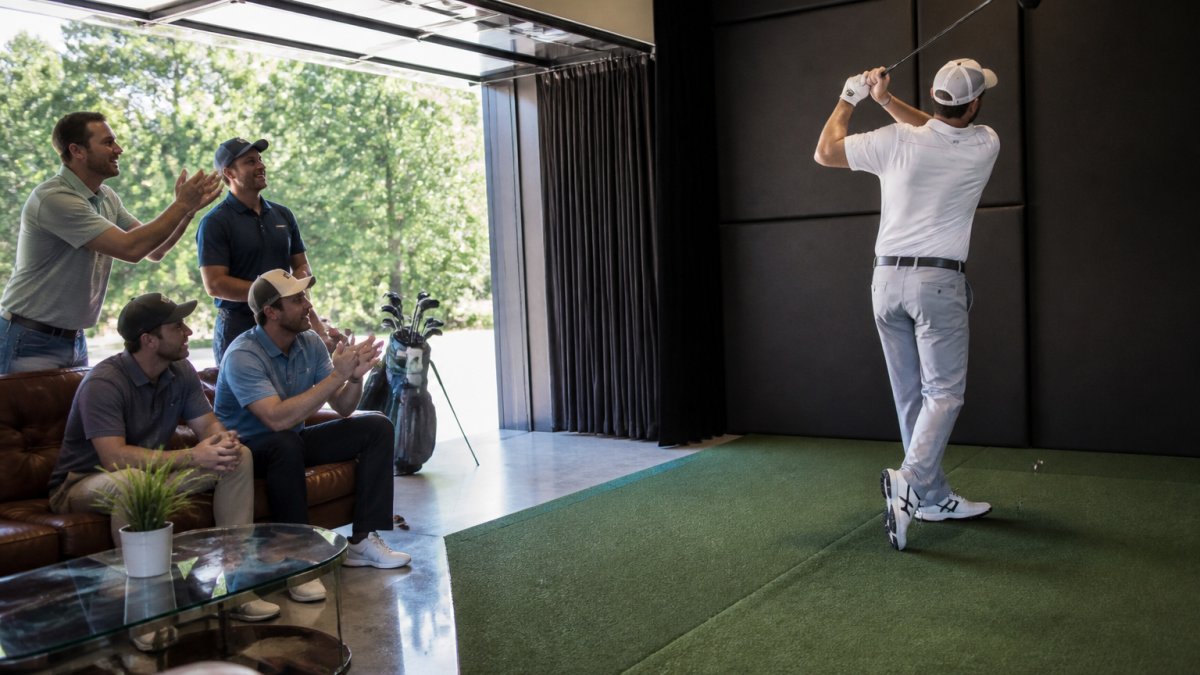
Arrive at least 30 minutes early. Walk through the facility, confirm that all bays are set up correctly, and verify that food and beverages are ready. Brief your venue staff on your guest list size and any special needs.
Greet guests as they arrive. Have name tags and team assignments ready so people know where to go.
Start play on time. Delays at the beginning create a cascade of issues throughout the event. If someone is running late, don't hold up the group. They can join after the first hole if they arrive soon.
During play:
- Circulate among the bays to check in with teams
- Keep the energy positive, make jokes, celebrate good shots
- For mixed-skill groups, encourage experienced golfers to mentor beginners
- Keep score visible so teams know where they stand
After play:
- Finalize scores quickly so people don't lose momentum
- Announce winners promptly and hand out prizes
- Thank everyone for attending and highlight what made the day special
- Transition to food and networking time while energy is still high
A private indoor facility like Open Tee Golf in Wyoming makes this easier. You're not managing pace-of-play complaints or weather delays. Your group stays together, plays in a controlled environment, and the technology handles score tracking automatically.
Hosting corporate golf is an investment in your team and business relationships. The planning matters, but so does choosing a venue that delivers a professional experience without logistical headaches.
Frequently Asked Questions
How do you plan a corporate golf event?
Start by setting your date, budget, and attendee count. Choose a venue that matches your group size and skill level, consider an indoor facility for year-round reliability and private group space. Create a detailed checklist covering invitations, scoring format, catering, and prizes. Build a timeline that includes sending invites 3-4 weeks ahead, confirming attendance 2 weeks out, and finalizing logistics one week before. A private indoor golf facility offers the advantage of climate-controlled space, no tee time constraints, and the ability to host groups comfortably in a professional setting.
What is the best format for a corporate golf outing?
The best format depends on your group's skill level and goals. Scramble format works well for mixed-ability teams because players combine their best shots. Four-ball matches suit competitive groups. Best ball format encourages teamwork while allowing individual scoring. For client entertainment or team building, a fun scramble with handicap adjustments levels the playing field and keeps everyone engaged. Indoor venues allow you to run multiple formats simultaneously in separate bays without scheduling conflicts.
What should you include in a corporate golf event invitation?
Include the date, time, location, and format. Specify the skill level or handicap range if relevant. Mention what's provided (catering, beverages, prizes) and what attendees should bring. Include RSVP details and a deadline. If hosting at an indoor facility, note the private bay setup and any technology features like shot tracking. Mention parking, dress code, and whether this is a client event, team-building activity, or tournament. A clear invitation sets expectations and increases attendance.
How long does a typical corporate golf event take?
A full 18-hole round takes 3.5 to 4.5 hours depending on group size and pace. A 9-hole event takes 1.5 to 2.5 hours. Add 30 minutes to 1 hour for check-in, and 1 to 2 hours if you're including a meal or awards ceremony. Indoor golf is faster than outdoor courses because there's no walking between holes, no weather delays, and no tee time gaps. Most corporate events run 4 to 5 hours total with catering and social time included.