
Benefits of Private Indoor Golf: A 2026 Guide
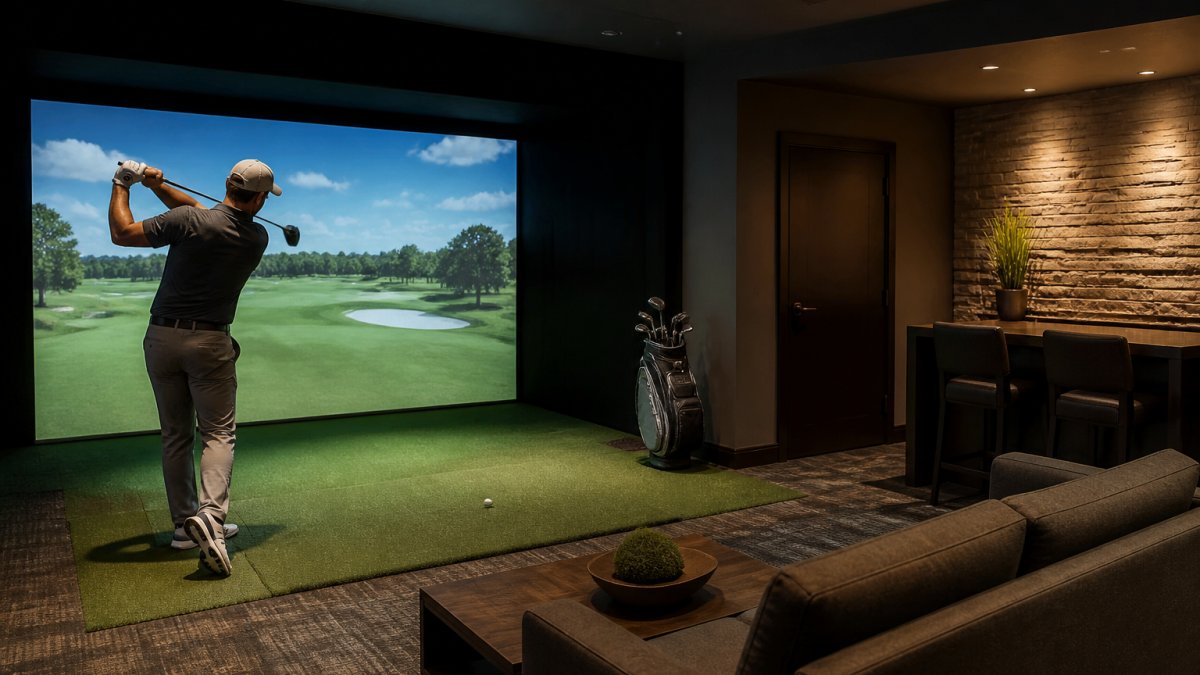
Table of Contents
- What Makes Private Indoor Golf Different
- Is Indoor Golf Worth It for Your Game
- Year-Round Practice Without Weather Constraints
- Indoor Golf Practice With Military-Grade Shot Tracking
- 24/7 Indoor Golf Access on Your Schedule
- Golf Simulator Membership Cost vs. Traditional Golf
- Private Bays for Serious Players, Social Groups, and Corporate Teams
- Frequently Asked Questions
Last Updated: October 16, 2026
What Makes Private Indoor Golf Different
Private indoor golf fundamentally changes how you approach the game. Unlike public courses or shared simulator bars, a private indoor golf facility gives you dedicated space, consistent conditions, and the freedom to practice or play without waiting for tee times or managing crowds. At Open Tee Golf in Wyoming, MI, members access climate-controlled bays equipped with Full Swing simulators, technology that captures every detail of your swing and translates it into precise performance data.
The difference isn't just about privacy. It's about control. You decide when you practice, how long you stay, and who shares the space with you. Weather doesn't factor in. Tee times don't exist. The conditions remain identical whether you're there at 6 AM or midnight.
For golfers serious about improvement, this consistency matters more than most people realize. A common mistake is assuming that practice time is practice time, regardless of environment. The reality is that variables, crowded ranges, inconsistent lighting, weather interruptions, pressure from other players, create friction that distracts from the actual work of refining your swing mechanics.
Is Indoor Golf Worth It for Your Game
Whether private indoor golf is worth it depends on what you're trying to achieve and how you currently practice. If you're a casual golfer who plays twice a year, probably not. If you're someone who wants to improve measurably, compete seriously, or practice on your own schedule, the answer shifts dramatically.
The honest assessment: private indoor golf works best for golfers with specific goals. Competitive amateur players benefit from the precision data. Shift workers benefit from 24/7 access. Social groups and couples benefit from the private, premium environment. Business professionals benefit from having a venue for client entertainment that feels like a real club, not a bar with golf simulators.
What makes private indoor golf worth considering is that it removes the barriers that prevent consistent practice. Many golfers say they want to improve but never follow through because practice requires driving to a range, waiting for space, dealing with weather, or squeezing sessions into limited daylight hours. Private indoor golf eliminates those friction points.
The investment makes sense when the alternative is inconsistent, interrupted, or infrequent practice. If you're already committed to regular sessions, a membership at a facility like Open Tee Golf in Wyoming provides an environment designed to maximize that commitment.
Year-Round Practice Without Weather Constraints
This is where private indoor golf delivers one of its clearest advantages. In northern climates, the off-season can stretch six months or longer. Outdoor courses close. Ranges become difficult to access. Your game deteriorates while you wait for spring.
A climate-controlled private bay means you practice in January the same way you practice in July. No rain delays. No frozen ground. No wind throwing off your shot patterns. The conditions remain stable, which means your practice data stays consistent and meaningful.
Consistency in practice environment is underrated. When you practice outdoors, variables compound: wind speed and direction change your ball flight, temperature affects ball behavior, lighting shifts throughout the day. These aren't minor distractions, they're noise in your data. You can't reliably tell whether a swing change improved your mechanics or whether external conditions just happened to favor that particular shot.
Indoor golf removes that noise. You isolate the variable that actually matters: your swing. This is especially valuable during off-season months when you're trying to maintain sharpness or work on specific mechanical changes. Many competitive amateur golfers in the Grand Rapids area use private facilities specifically for this purpose, they stay sharp through winter while competitors lose ground.
The year-round access also means you never lose momentum. If you commit to a practice schedule, you can maintain it regardless of season or weather. That consistency compounds over time in ways that sporadic, weather-dependent practice never does.
Indoor Golf Practice With Military-Grade Shot Tracking
Full Swing simulator technology captures data that outdoor practice simply cannot. Every shot records launch angle, ball speed, spin rate, spin axis, carry distance, and landing position. Over dozens or hundreds of shots, patterns emerge that reveal exactly where your swing mechanics need adjustment.
This data transforms practice from guesswork into precision work. Instead of hitting balls and hoping you're improving, you see exactly what changed. A swing adjustment that reduces spin by 200 RPM shows up immediately. A change in launch angle that adds 5 yards appears in the data. You're not relying on feel or intuition, you're working with measurable feedback.
Beginners benefit from this too, though many assume shot tracking is only for serious competitive players. A beginner who sees their own data, "my driver launch angle is 22 degrees when it should be 15-18 degrees", understands the problem concretely. That clarity accelerates learning far faster than a coach saying "you're launching too high" without context.
The data also builds accountability. You can't fool yourself about progress. If your average driving distance hasn't improved in three months, the data shows it. If a new grip or stance change actually works, the numbers prove it. This feedback loop is what separates practice that produces results from practice that just burns time.
Many golfers who've used private indoor golf facilities report that the shot tracking data changed how they approach improvement. Instead of practicing randomly, they practice with purpose. They target specific metrics. They measure progress week to week. That shift in approach, from hope to data-driven adjustment, is often what makes the membership pay for itself.
24/7 Indoor Golf Access on Your Schedule
Accessibility is one of the most underrated benefits of private indoor golf. Open Tee Golf in Wyoming offers 24/7 member access, which means you practice when it works for you, not when the course or range is open.
For shift workers, this is transformative. A person working nights can't use a traditional range. A person with irregular hours can't book consistent tee times. A 24/7 private facility removes that barrier entirely. You finish your shift at 2 AM and want to get in a practice session? You can.
For busy professionals, 24/7 access means you squeeze practice into your actual schedule instead of rearranging your life around course hours. Thirty minutes before work. An hour at lunch. A quick session on a Sunday night. The flexibility compounds, you practice more often because the friction of access disappears.
The psychological benefit matters too. Knowing you can practice whenever you want removes the pressure of "I have to go now or I won't get another chance for days." That pressure often leads to rushed, unfocused sessions. When you know you can return tomorrow or the next day, each session becomes more intentional.
For social groups and couples, 24/7 access means you can play together on your own schedule. No waiting for a tee time. No worrying about holding up golfers behind you. You control the pace and the experience entirely. Many couples in the Grand Rapids area use private facilities as a standing date, every weekend, same time, same private bay. That consistency builds the habit that leads to real improvement.
Golf Simulator Membership Cost vs. Traditional Golf
Comparing the true cost of private indoor golf to traditional golf requires looking beyond the obvious numbers. A traditional golf membership or frequent public course play involves greens fees, cart rentals, range balls, and the time investment of driving to and from the course. A private indoor golf membership bundles all of that, unlimited practice, unlimited play, climate control, no wait times, into a single monthly commitment.
The value proposition shifts depending on how often you currently play or practice. A golfer who plays once a month barely moves the needle on value. A golfer who plays or practices three or more times weekly finds the membership cost spreads across many more sessions, making the per-session cost competitive or better than traditional golf.
What many golfers miss is the hidden cost of traditional golf: time. Driving to a course or range, waiting for a tee time or range space, playing a full round or session, driving home, that's easily three to four hours for a round. A private facility session can be thirty minutes to two hours depending on what you want to accomplish. For busy professionals, that time efficiency is worth something.
For pricing details specific to Open Tee Golf in Wyoming, visit the facility directly or contact the membership team, membership structures vary based on usage patterns and commitment level, and the team can walk you through options that match your goals.
The real question isn't "Is this cheaper than golf?" It's "Will I actually practice more consistently if the friction of access disappears?" For most golfers who answer yes, the membership pays for itself through improved consistency and measurable progress.
Private Bays for Serious Players, Social Groups, and Corporate Teams
The private bay model serves three distinct audiences, each with different needs from the same space.
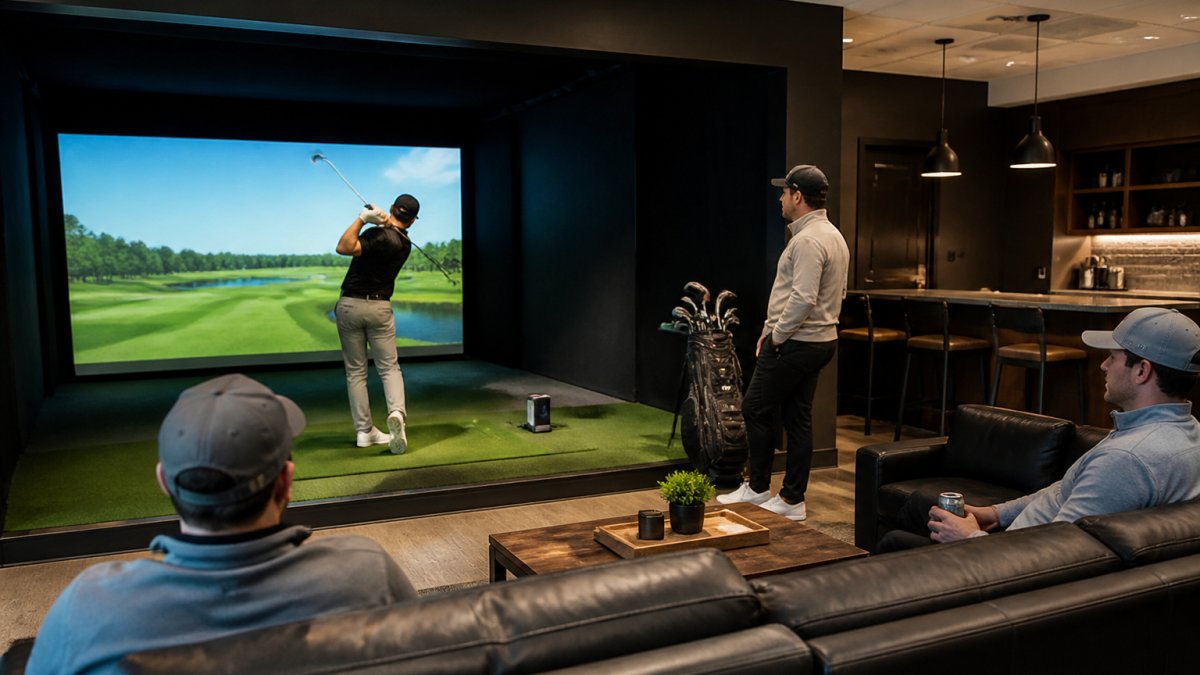
For serious competitive players, a private bay is where precision practice happens. No distractions. No audience. No pressure from other golfers. You work on specific mechanics, review shot tracking data, and refine your approach to competition. Many competitive amateur golfers in the Grand Rapids area use private bays as their primary training environment during the off-season and year-round.
For social groups and couples, the private bay becomes a shared experience. You're not competing against each other in a public setting where you feel watched. You're playing together in a comfortable, premium environment. Many couples report that private indoor golf became their regular date, something they both enjoy, that keeps them engaged with each other, and that actually improves their game. Social groups use private bays for everything from friendly competitions to casual rounds with friends who might not all play at the same skill level.
For corporate teams and client entertainment, the private bay offers something that public courses can't: control over the experience. You're not waiting for a tee time. You're not dealing with crowded conditions. You're hosting clients in a professional, private setting that feels exclusive. The Full Swing simulators mean even non-golfers can participate, the technology makes the game accessible and fun for everyone. Many business professionals in the Grand Rapids area use Open Tee Golf specifically for client entertainment and team building.
The privacy of the bay also means you can customize the experience. Want to play a full round? You control the pace. Want to run a competition or tournament format? You set the rules. Want to focus on practice drills? You dedicate the time without worrying about golfers waiting behind you. That flexibility is something you simply don't get at a public course.
Private indoor golf isn't for everyone, but for golfers who want consistent, year-round access to precision practice and play, it solves problems that traditional golf leaves unsolved. Open Tee Golf in Wyoming, MI provides exactly that, 24/7 member access to climate-controlled private bays with Full Swing simulator technology, military-grade shot tracking data, and the flexibility to practice and play on your schedule.
Frequently Asked Questions
Is a golf simulator membership worth it for beginners?
Yes. Beginners gain more from simulator data than experienced players because they're still building fundamentals. Shot tracking shows exactly where your ball goes, club head speed, launch angle, and spin rate, information that's invisible on a driving range. The private, pressure-free environment also helps new players focus on mechanics without the anxiety of playing in front of others.
How accurate is indoor golf simulator data compared to real course conditions?
Full Swing simulators use military-grade optical technology to track ball flight. The data translates directly to real courses because it measures actual physics: launch angle, spin rate, club head speed, and ball direction. However, simulators don't replicate wind, uneven terrain, or psychological pressure of competition. Use simulator data to refine technique, then test it on the course.
Can you really access a private indoor golf facility at 2 AM, or is that marketing talk?
Yes, 24/7 member access is real. Shift workers, night-shift professionals, and golfers with unpredictable schedules benefit most from this feature. You can walk in at any hour with your member card.
What's the difference between private indoor golf and public simulator bars?
Private membership clubs offer dedicated bays reserved exclusively for members, climate control, and no crowds or noise from other groups. Public simulator bars operate like bars first, they're social, louder, and shared equipment. Private facilities prioritize serious practice and exclusive entertainment; public venues prioritize social drinking and casual fun. For competitive improvement or hosting clients professionally, private bays provide focus and privacy. For casual fun, public simulators work fine.