
Indoor Golf for Social Groups: A Planning Guide
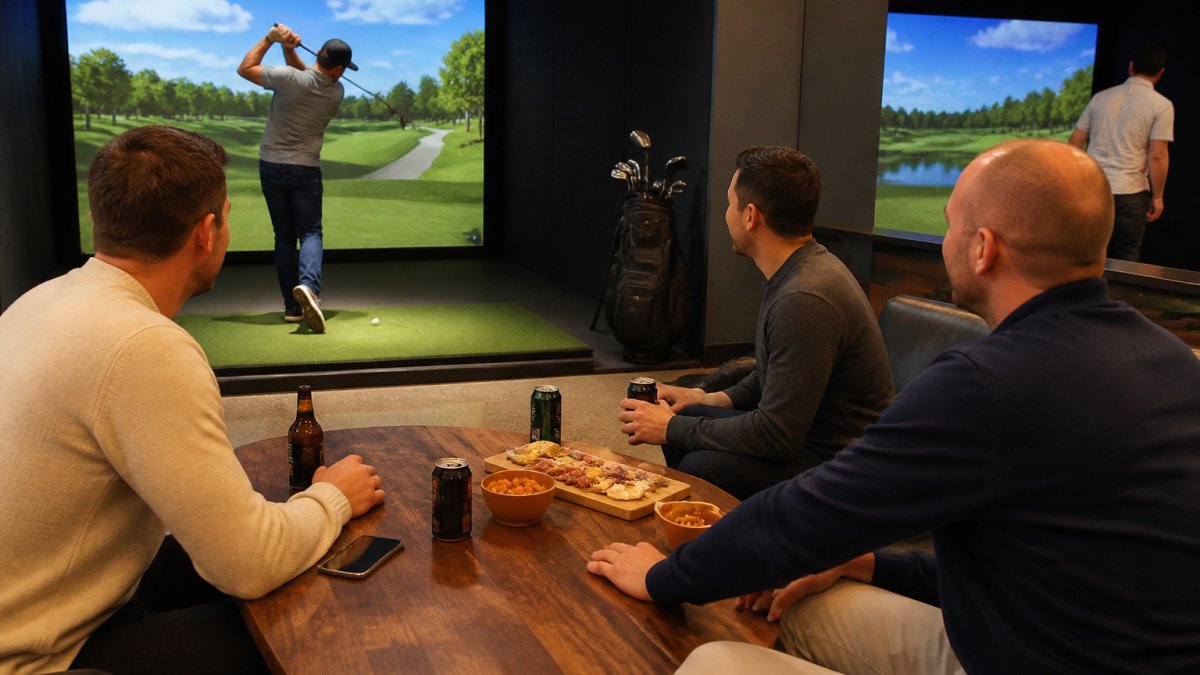
Table of Contents
- Why Indoor Golf Works for Social Groups
- Indoor Golf Tournament Formats That Keep Everyone Engaged
- Indoor Golf League Rules and Scoring Systems
- Setting Up Your Indoor Golf League Schedule
- How to Book an Indoor Golf Simulator for Your Group
- Tips for Managing a Successful Group Outing
- Frequently Asked Questions
Last Updated: October 11, 2026
Why Indoor Golf Works for Social Groups
Indoor golf for social groups has become one of the best ways to bring friends, family, or colleagues together year-round. Unlike traditional golf courses, which depend on weather and require advance tee times, an indoor golf facility gives your group complete control over when and how you play.
The appeal is straightforward. You get a private space where everyone can relax and compete without crowds or time pressure. No waiting between holes. No weather delays. Just your group, the simulators, and the game.
Wyoming has seen growing interest in indoor golf for exactly these reasons. Groups discover that a private bay creates a different experience than a public golf bar. It feels exclusive. It feels like a real club. That matters when you're hosting clients, celebrating with friends, or building team bonds.
At Open Tee Golf, social groups use our facility for everything from casual rounds to structured league play. The Full Swing simulator technology tracks every shot with precision data, so players improve while they play. Beginners get real feedback on their swing mechanics. Competitive players get the exact metrics they need to refine their game.
The real advantage: everyone plays at their own pace, on their own schedule, in a space designed for your group alone.
Indoor Golf Tournament Formats That Keep Everyone Engaged
Choosing the right format makes the difference between a forgettable outing and one people talk about for months. The format determines how scores work, who competes against whom, and how the day unfolds.
Three formats dominate indoor golf for social groups. Each creates a different dynamic and appeals to different group personalities.
Scramble Format
A scramble is a team format where all players hit from the best shot. After each stroke, the team plays the next shot from wherever the best drive or approach landed. This means weaker golfers contribute meaningfully. No one gets left behind. The format rewards teamwork and keeps pace of play fast.
Scramble works best for mixed-skill groups. A beginner paired with an experienced player doesn't feel outmatched. The experienced player's good shots carry the team. The beginner's occasional great shot counts just as much.
In a typical scramble, you divide your group into teams of two or four. Each team plays one ball. You keep the best shot, and everyone plays from that position. The score is the total strokes for the team to finish the course.
Many groups use scramble for client entertainment or casual outings. It's inclusive. It moves fast. It keeps tension low while still making the competition meaningful.
Best Ball Format
Best ball is a team format where each player plays their own ball, and the team's score is the best score on each hole. If one player shoots a 5 and another shoots a 7, the team records a 5.
This format rewards individual skill while keeping team dynamics alive. Strong players feel challenged. Weaker players know their bad hole won't sink the team. It's less forgiving than scramble but more forgiving than stroke play.
Best ball works well for groups with a wider range of abilities. Competitive golfers get to showcase their game. Recreational players still contribute when they have a good hole.
Match Play Format
Match play scores holes, not total strokes. If you shoot a 4 and your opponent shoots a 5, you win that hole and go up one point. The player or team with the most holes won takes the match.
Match play creates drama. Every hole matters individually. You can be down five holes with five to play and still win. The format rewards clutch play and mental toughness.
This format works best for groups comfortable with competitive intensity. It's popular for league play and head-to-head challenges.
Indoor Golf League Rules and Scoring Systems
Running an indoor golf league requires clear rules so everyone understands how scores count and how standings work. Without structure, disputes happen. With structure, the league runs smooth.
Most indoor golf leagues use one of two scoring approaches: stroke play or match play.
Stroke play totals every shot. You play a full round (usually 9 or 18 holes). Lowest score wins. This is the most familiar format for most golfers. It's simple to track and easy to compare scores week to week.
Match play scores holes won. You play the same 9 or 18 holes, but you're counting how many holes you won against your opponent, not total strokes. This format creates tighter competition because one bad hole doesn't ruin your whole round.
Many leagues use a handicap system to level the field. A golfer with a higher handicap gets strokes deducted from their score. This lets golfers of different abilities compete fairly. A beginner with a 20 handicap might play a 9-hole round, shoot a 52, and receive 20 strokes. Their net score becomes 32, which can beat a better player's net score even if their gross score was higher.
Keeping standings is essential. Most leagues track wins, losses, and total points. Some leagues award bonus points for birdies or eagles to reward great shots. Others use a points system where first place gets 3 points, second gets 2, third gets 1.
The key is consistency. Pick your scoring system at the start of the season and stick with it. Players need to know the rules before they join.
Setting Up Your Indoor Golf League Schedule
A league schedule creates commitment and builds momentum. Without a schedule, your group meets sporadically. With one, people mark it on their calendar and show up.
Start by deciding how long your league runs. Most leagues run 8-12 weeks. That's long enough to feel like a real season but short enough to maintain interest. Some groups do seasonal leagues: fall, winter, spring.
Decide how often you play. Weekly is ideal for most groups. It builds routine. Players know they're coming back next Thursday at 6 PM. Monthly or biweekly works if your group has scheduling conflicts.
Next, determine the format. Will everyone play every week, or will you rotate pairings? For a small group (4-8 people), everyone plays everyone. For larger groups, you might use a rotation where each player faces different opponents each week.
Set your tee times. At Open Tee Golf, groups book private bays. You control the schedule completely. There's no waiting for other groups. Your league can start at 6 PM on a Tuesday if that works for your members.
Create a simple standings sheet. Track wins, losses, points, or whatever scoring system you chose. Post it somewhere your group can see it. A shared spreadsheet or group chat works fine. Visibility keeps people motivated.
Consider an end-of-season event. A playoff round. A championship match. A celebration dinner. Something that marks the season's finish. This gives your league a narrative arc instead of just ending.
How to Book an Indoor Golf Simulator for Your Group
Booking an indoor golf facility for a group requires knowing your group size, how much time you need, and what kind of environment matters most for your outing.
Group Size and Time Allocation
Start with headcount. How many people are coming? This determines how many simulator bays you need.
Most private bays fit 4 people comfortably. Some groups put 5 or 6 in one bay, but comfort drops. A bay with 4 people feels spacious and lets everyone take their time with each shot.
Time allocation depends on skill level and format. A casual group playing 9 holes in one bay takes about 90 minutes. A competitive group playing 18 holes takes 2.5 to 3 hours. If your group includes beginners, add 30 minutes.
For a group of 12 people, book 3 bays. For 8 people, book 2 bays. This gives everyone room to swing without feeling cramped.
Choosing the Right Venue
Not all indoor golf facilities are equal. Some are simulator bars with shared screens and minimal privacy. Others are private clubs with dedicated bays for your group alone.
For a social outing, privacy matters. A private bay means your group can talk, celebrate, and relax without worrying about strangers at the next simulator. It feels like a real club. The energy is different.
Look for a facility with modern simulator technology. Full Swing simulators track shot data precisely. You see ball speed, launch angle, spin rate, and where the ball lands. This data helps players improve and makes the experience feel more authentic.
Check the facility's hours. If your group works during the day, you need evening availability. If you include night-shift workers, 24/7 access matters. Some facilities close at 10 PM. Others stay open all night.
Climate control is underrated. A comfortable temperature keeps your group relaxed for hours. A hot or cold bay makes people uncomfortable and cuts the outing short.
Ask about food and beverage. Can you bring your own? Does the facility have a bar or snacks? This affects whether your group stays for three hours or leaves after one.
Pricing depends on the facility and time of booking. Peak times (Friday and Saturday evenings) cost more. Off-peak times (Tuesday afternoon, early morning) cost less. Many facilities offer membership options for regular groups.
Tips for Managing a Successful Group Outing
The difference between a good outing and a great one is management. Small details create the experience your group remembers.
Set expectations before you arrive. Tell your group what format you're playing, how long it will take, and what the rules are.
Arrive 15 minutes early. Get the bays set up. Test the simulators. Make sure everything works before your group shows up. A broken simulator derails the whole outing.
Keep the pace moving. In a private bay, you control the pace. Encourage players to take their shot when it's their turn. Limit practice swings. Move between holes smoothly.
Manage the competitive intensity. Some groups want casual fun. Others want serious competition. Know your group. If you have a mix, create a format where both types enjoy themselves.
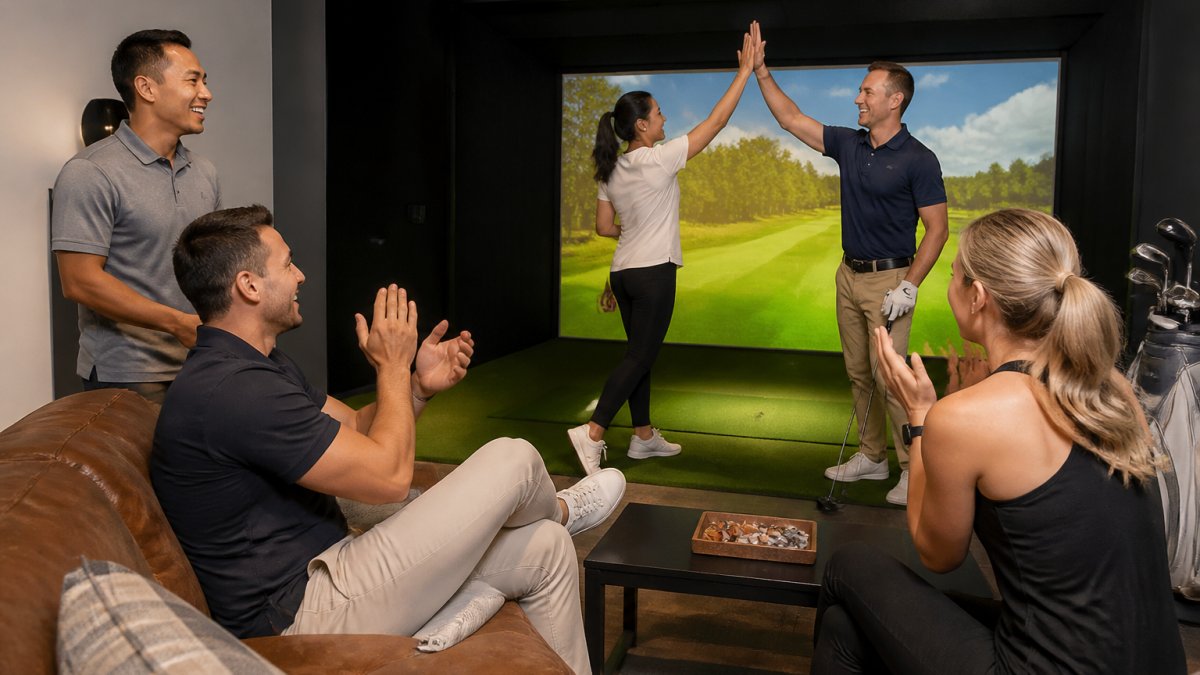
Celebrate good shots. When someone hits a great shot, acknowledge it. This builds camaraderie. It makes the outing feel special. The Full Swing data makes this easy.
Have a tiebreaker plan. If two players or teams end up tied, how do you break the tie? Sudden death playoff? Most birdies? Longest drive? Decide this before the outing starts.
Take a group photo. Capture a moment of your group in the bay. These become memories. They also build loyalty to your group.
Debrief after. Grab drinks or food afterward if possible. Let people talk about their best shots. Discuss the next outing. This extends the experience beyond just the golf.
Planning an indoor golf outing for your social group doesn't require complicated logistics. You need a private bay, a clear format, and a group ready to play.
Frequently Asked Questions
How do you organize an indoor golf event for a group?
Start by choosing a format that matches your group's skill level and preferences, scramble, best ball, or match play all work well. Book your simulator bays in advance, set clear start times, and decide on scoring rules beforehand. Assign someone to track scores and manage the schedule. Most groups book 2-3 hours per round, with breaks between matches. Communicate all details to participants at least a week ahead so everyone knows what to expect.
What's the ideal group size for indoor golf with a simulator?
Groups of 4-8 people work best for indoor golf. Four players per bay is standard for a round, but you can rotate groups or run multiple bays simultaneously if you have more people. Larger groups (12+) benefit from staggered start times to avoid bottlenecks. Indoor golf simulator group booking typically accommodates flexible configurations, so discuss your group size with the venue when reserving bays.
Can beginners play alongside experienced golfers in a group setting?
Yes, formats like scramble and best ball are designed for mixed-skill groups. In scramble, everyone hits, and the team plays the best shot, which keeps the pace quick and reduces pressure on beginners. Best ball lets each player contribute without holding others back. Match play can work too if you pair players of similar ability. The key is choosing a format that keeps the experience fun and inclusive for all skill levels.
How long should you book an indoor golf simulator for a group outing?
Most groups book 2-3 hours per round. A standard 18-hole round takes 1.5-2 hours depending on pace and group size. Add 30 minutes if you want warm-up time beforehand or a social break between matches. For tournaments or league play, allocate extra time for score tracking and announcements. Discuss your group's pace and preferences when making your indoor golf simulator group booking so the venue can recommend the right duration.