
Year-Round Golf Practice in Michigan: A Complete Guide
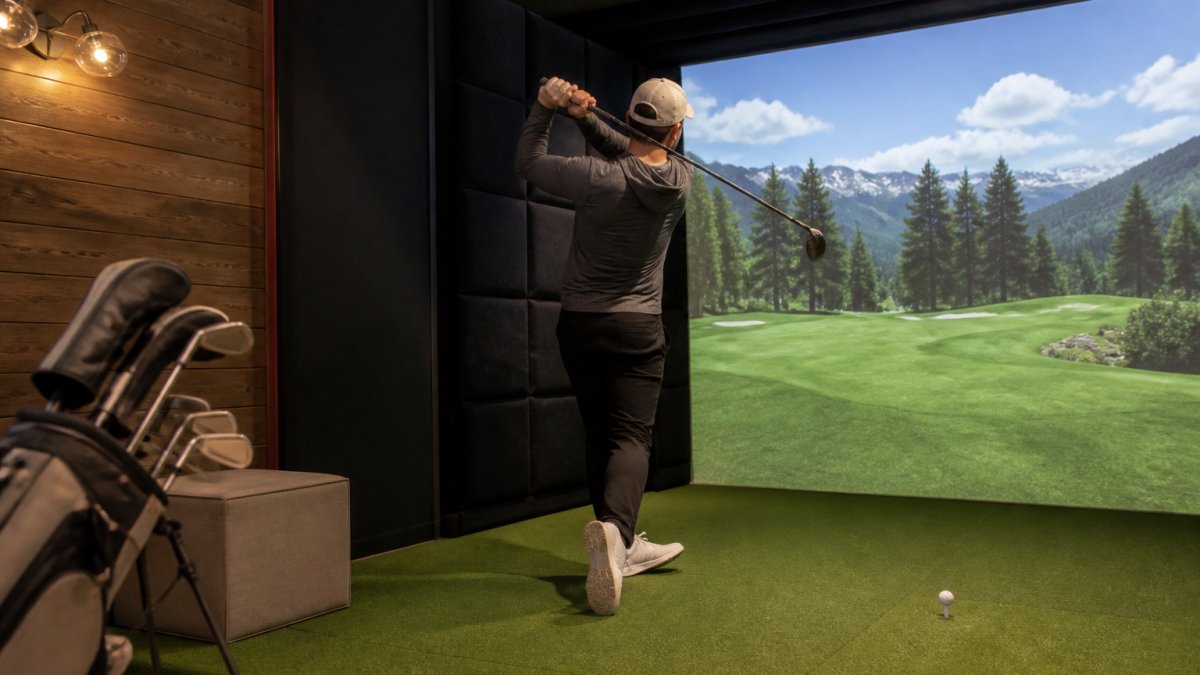
Table of Contents
- Why Year-Round Golf Practice in Michigan Matters
- Building a Golf Simulator Practice Routine That Works
- How to Improve Golf Swing Speed Using Simulator Data
- Using Golf Simulator Data for Swing Improvement
- Winter Golf Practice Drills for Off-Season Sharpness
- Indoor Golf Facilities: What to Look for Year-Round
- Maintaining Your Game During Winter Months
- Frequently Asked Questions
Last Updated: October 12, 2026
Why Year-Round Golf Practice in Michigan Matters
The golf season in Michigan doesn't have to end when the temperature drops. Many golfers play hard in summer, then watch their game deteriorate through the long winter. But that's a choice, not a necessity.
The real advantage isn't just staying sharp. It's precision. Indoors with simulator technology, every shot gets measured: club head speed, launch angle, spin rate, and ball flight data you'd never get on a practice range.
This guide from Open Tee Golf covers how to build a sustainable year-round routine, how to use simulator data to fix swing flaws, and what to look for in an indoor facility that delivers results.
Building a Golf Simulator Practice Routine That Works
A golf simulator practice routine only works if you stick to it.
Start by defining what "practice" means for you: full rounds, short-game work, or drills targeting weaknesses. Most golfers benefit from mixing all three, but the mix depends on your goals.
The second decision is frequency. Consistency matters more than volume: two focused sessions per week, where you know exactly what you're working on, beat sporadic marathon sessions. Set a schedule you can maintain for months, not weeks.
Structure Your Weekly Practice Schedule
A solid weekly structure gives your practice direction. Split sessions into two types: development sessions and maintenance rounds.
Development sessions are 60-90 minutes focused on specific improvements: 20 minutes on a drill like hitting 7-irons to targets, then short-game work.
Maintenance rounds are full 18-hole simulations played at a reasonable pace. They keep course management sharp and show how your swing performs under pressure.
Schedule these sessions at times you'll actually keep. If you work nights, 24/7 access to a facility near you in Wyoming, MI makes year-round golf practice in Michigan realistic. Otherwise, pick the same days and times each week. Consistency beats intensity.
Balancing Short and Long Practice Sessions
Not every session needs to be the same length. A 30-minute focused short-game session beats a 90-minute unfocused ramble. Know what you're accomplishing in each one.
Short sessions work best for targeted improvement. Pick one weakness, approach shots from 100 yards, bunker play, or lag putting, and drill it for 30-40 minutes.
The mistake most golfers make is treating every session the same. Random, undirected practice doesn't produce results; structured sessions do.
How to Improve Golf Swing Speed Using Simulator Data
Club head speed is one of the most misunderstood metrics in golf. Many golfers think it's purely physical, but swing speed is largely a technical problem that simulator data can help you solve.
The Full Swing simulator at Open Tee Golf measures club head speed with precision, giving you a baseline to work from. Most golfers can add miles per hour through better technique alone, without getting stronger.
Understanding Club Head Speed Metrics
Club head speed is measured in miles per hour at impact. That gap isn't just physical, it's technical efficiency.
The simulator shows not just club head speed but how it translates to ball speed and distance. A golfer with 90 mph and poor technique might produce 135 mph ball speed; one with 88 mph and better technique might produce 138 mph. The difference is efficiency, how much swing speed transfers to the ball.
This is where simulator data becomes invaluable. You can see exactly where your swing loses energy: a collapsing lag angle, deceleration through impact, or faulty sequence. Without that feedback, you're working blind.
Progressive Speed Development Drills
Improving club head speed is a progression. You build toward it through drills that train your body to move faster while maintaining control.
Start with tempo drills. Many golfers swing faster but lose consistency; tempo drills teach smooth acceleration through the ball.
Next, add sequencing drills. Swing speed comes from efficient sequencing: lower body initiates, core follows, arms last. Poor sequencing wastes energy.
Finally, add power drills: medicine ball throws, explosive step-throughs, and similar movements that train force generation. Combined with technical drills, these produce real gains.
Track your progress in the simulator. Every few weeks, measure club head speed with a full-effort swing.
Using Golf Simulator Data for Swing Improvement
The real power of year-round golf practice in Michigan comes from data. Every simulator shot generates metrics: club head speed, launch angle, spin rate, carry distance, ball flight shape. Most golfers ignore this data; the ones who don't can see significant improvement.
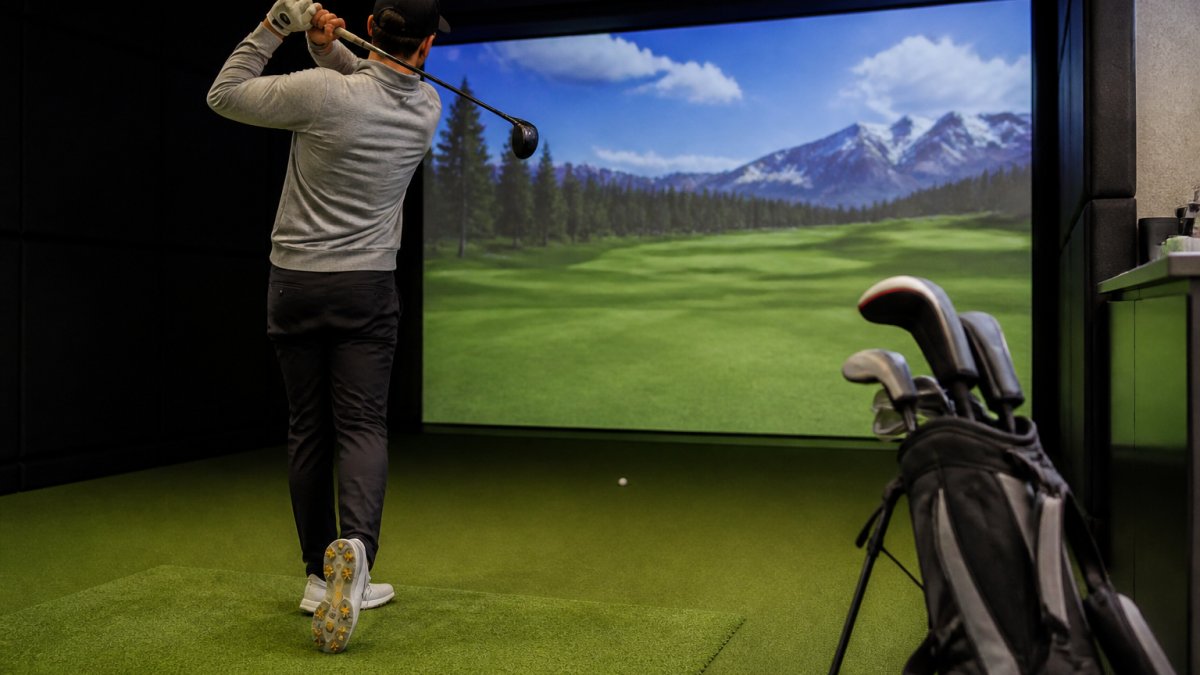
Data-driven improvement removes guesswork. You're not relying on feel or a friend's opinion, you're measuring what's actually happening and adjusting based on objective feedback.
Tracking Consistency Across Sessions
Consistency is the foundation of a good golf game. Consistency means hitting the same shot the same way repeatedly. The simulator tracks this automatically.
Over multiple sessions, patterns emerge. If your 7-iron carry distance varies by 12 yards session to session, that's inconsistency.
Once you identify the source, you can address it. Most inconsistency comes from one or two specific breakdowns; fix those and consistency can improve. The simulator shows them in real time.
Track your metrics over weeks and months. Open Tee Golf's Full Swing simulator stores your data, so you can see whether your best 7-iron distances are improving and your consistency tightening.
Identifying Swing Patterns and Weaknesses
Every golfer has patterns: slicing the driver but drawing the 3-wood, hitting irons well but struggling with wedges, or being consistent with full swings but terrible with partial ones. The simulator reveals them.
Look at data across multiple shots, not one or two. One bad shot is noise; ten 7-irons with nine sharing the same flaw is a pattern worth fixing.
Common patterns include:
- Inconsistent club head speed that correlates with poor shots
- Launch angles that are too high or too low for your club
- Spin rates that don't match your swing type
- Ball flight shapes that indicate alignment or path issues
Once you identify a pattern, build drills to fix it. Launch angles too high with irons means de-lofting at impact; driver spin too high means a shallower angle of attack. The data points you toward the specific fix.
Winter Golf Practice Drills for Off-Season Sharpness
Winter separates serious golfers from casual ones. Casual golfers accept that their game will deteriorate; serious golfers use winter to get better. Year-round golf practice in Michigan during winter months is the difference.
Indoor facilities let you drill the same shot fifty times with consistent feedback, impossible on an outdoor range in January in Michigan.
Short-Game Precision Drills
The short game is where winter practice produces the biggest returns. Most golfers neglect it, especially in winter, but short-game consistency separates good golfers from great ones.
Spend 30-40 minutes per week on short-game drills. Pick a distance, say 50-75 yards, and hit 20-30 shots. The simulator shows carry distance, spin rate, and landing pattern, and your consistency at that distance can improve.
Rotate through distances and scenarios: 50-75 yards one week, 75-100 the next, then full-distance wedge play. Rotation builds a comprehensive short game.
Full-Swing Consistency Challenges
Full-swing work in winter should focus on consistency under pressure. Play simulated rounds targeting specific shots to teach your brain to perform when it matters.
One effective drill is the "par challenge": a simulated nine-hole course where every hole is a par 3 and you get one shot per hole. It teaches commitment and execution under pressure, surprisingly difficult and highly effective.
Another is the "consistency round": 18 holes where the goal isn't score but fairways and greens hit. Track both over weeks; most golfers improve after consistent winter practice.
Indoor Golf Facilities: What to Look for Year-Round
Not all indoor golf facilities are created equal. Some are bars with simulators; others are serious training environments. If you're committing to year-round golf practice in Michigan, you need a facility that supports it.
Simulator Technology and Accuracy Standards
The simulator is everything. Poor technology produces poor data. You need a simulator that accurately measures your swing and ball flight.
Full Swing simulators, like those at Open Tee Golf, use multiple cameras and sensors to track club head speed, path, face angle, and ball flight, with accuracy comparable to professional launch monitors. That precision is what meaningful data-driven improvement requires.
Avoid facilities with older simulator technology; anything more than five years old likely has compromised accuracy. Ask about the technology, a good facility will explain its system confidently.
Private Bays and Climate Control Benefits
Year-round golf practice in Michigan requires climate control. A facility where you shiver through your swing won't work; you need temperature control that lets you focus on golf, not survival.
Private bays matter too. Practicing in a shared space changes your focus; private bays let you work on specific shots repeatedly without distraction or self-consciousness.
Open Tee Golf offers both. Climate-controlled private bays mean comfortable year-round practice regardless of Michigan weather, so you can focus purely on improvement.
24/7 Access and Flexible Scheduling
Life doesn't follow a 9-to-5 schedule. If a facility closes at 8 PM and you work until 7 PM, you can't use it regularly. 24/7 access solves that.
Shift workers, busy professionals, and anyone with an irregular schedule needs flexible access. A facility open whenever you need it removes barriers to consistent practice, letting you fit golf into your life instead of the reverse.
Maintaining Your Game During Winter Months
Winter in Michigan is long. From November through March, outdoor golf is often impossible. That's five months where most golfers watch their game deteriorate.
The key to maintaining your game through winter is treating practice like a commitment, not an option.
Use winter for targeted improvement on weaknesses.
Track your progress through the winter. Measure your metrics in November, then again in March.
Year-round golf practice in Michigan is no longer a luxury. Indoor facilities with Full Swing simulator technology have made it accessible and practical.
Frequently Asked Questions
How can I practice golf year-round in Michigan?
Indoor golf simulators provide climate-controlled, private practice space regardless of weather or season. With 24/7 facility access, you can practice before work, during lunch, or late at night without waiting for tee times. Full Swing simulator technology delivers accurate shot data indoors, letting you work on swing mechanics, short game, and course strategy year-round without the constraints of outdoor course conditions.
What should I work on during the golf off-season with a golf simulator practice routine?
Focus on fundamentals and consistency during winter months. Use your golf simulator practice routine to drill short-game shots, work on swing tempo, and refine your setup. Target specific weaknesses identified from your on-course play the previous season. Many golfers dedicate off-season practice to building swing speed and consistency, which translates directly to spring and summer performance when courses reopen.
How do I use simulator data to improve my golf game?
Golf simulator data for swing improvement reveals metrics like club head speed, ball speed, launch angle, and spin rate. Track these numbers across multiple sessions to identify trends and inconsistencies. Compare data from different clubs and shot types to pinpoint which areas need work. Use this precision feedback to make targeted swing adjustments, then measure improvement in subsequent sessions. This data-driven approach removes guesswork from practice.
How often should I practice golf to see real improvement?
Golfers can see measurable improvement with 2-3 focused practice sessions per week. Quality matters more than quantity: 45 minutes of deliberate practice with specific goals beats 3 hours of casual swinging. Indoor simulators make consistent practice easier since you can practice on your schedule without weather delays or tee time availability. Tracking your data across sessions helps you recognize progress and stay motivated.
Can I really access an indoor golf facility at 2 AM, or is that marketing?
Yes, 24/7 access is real at premium indoor golf clubs. Shift workers, night owls, and busy professionals can practice whenever their schedule allows. Facilities with 24/7 membership support members at any hour. This flexibility means you're never limited by facility hours, making it realistic to build a consistent practice routine regardless of your work schedule or personal availability.
How accurate is indoor golf simulator data compared to real course conditions?
Modern Full Swing simulators use military-grade shot tracking technology that captures ball flight physics with high precision. While indoor simulators don't account for wind, elevation changes, or grass conditions, they accurately measure the fundamental mechanics of your swing and ball flight. The data is reliable for identifying swing flaws, tracking improvement, and building consistency. Many competitive golfers use simulator data to complement outdoor practice.